Posts

The Trial of Lizzie Borden

Image
Lizzie Borden was a woman accused of murdering her father and stepmother on August 4, 1892 in Fall River, Massachusetts. The circumstances were unprecedented for the time, and the trial, becoming known as the “Trial of the Century,” spawned a media frenzy that was a national sensation. I think the name ‘Lizzie Borden’ is still familiar to Americans today, and perhaps to those  in other parts of the world as well  who are interested in unsolved crimes. The Trial of Lizzie Borden , 2019, by Cara Robertson, is my choice for the topic True Crime for the 2024 Nonfiction Reader Challenge . The two victims, Andrew Borden and his second wife Abby, were hacked to death with an axe or hatchet, causing multiple blows to their skull and neck. In total, there were 29 wounds. Andrew’s face was unrecognizable, being described by a police officer as “a mass of raw meat.” It was determined that Abby was killed first, and Andrew about an hour later. That made it unlikely that the murderer ...

Between the Wind and the Water

Image
  Between the Wind and the Water: World Heritage Orkney , by Caroline Wickham-Jones, 2015, describes the Neolithic sites in Orkney that were given World Heritage status. Wickham-Jones explains that “the World Heritage Convention seeks to safeguard the well-being of exceptional sites of cultural and natural value.” In Orkney these sites are all located on the Brodgar peninsula: the settlement Skara Brae; the stone circles Ring of Brodgar and Stones of Stenness; the stone settings called Watch Stone and Barnhouse Stone; and the chambered tomb of Maeshowe. She describes each of these sites in terms of their history, purpose, setting, excavation and significance. The book includes photographs of the sites and their excavations. In addition, she describes the area and inhabitants in the Mesolithic era that preceded the construction of these sites, as well as the following Bronze and Iron Ages, which saw the arrival of the Picts, the Norse and the Romans. In each of these sections,...

Image on the Edge: The Margins of Medieval Art

Image
  In Image on the Edge: The Margins of Medieval Art ,   Michael Camille, former professor of Art History at the University of Chicago, describes and analyzes the artwork on the borders of Medieval manuscripts, stained glass windows, architecture and court decorations. His examples include both realistic and fantastic creatures, and many are incredibly pornographic images, which seem even more bizarre since they are framing themes from the Bible and religious ceremonies. I knew nothing about the subject, but I read this book for a week-long Art History course I’m going to take. This is also my choice for the Culture category of the 2024 Nonfiction Reader Challenge . Each chapter focuses on Art in the Margins of: Chapter 1: Illuminated Manuscripts Chapter 2: Monasteries Chapter 3: Cathedrals Chapter 4: The Court Chapter 5: The City And Chapter 6 is “The End of the Edge,” detailing “the beginning of the demise of the tradition of Gothic marginal representation.” ...

Scenes from Prehistoric Life

Image
  Scenes from Prehistoric Life: From the Ice Age to the coming of the Romans by Francis Pryor, 2021, focuses on the prehistory of Great Britain and Ireland through 15 archaeological excavations (in separate sections chronologically from 900,000 years ago to AD 410). Each excavation reveals information about the people, lifestyle and landscape of the corresponding time period. For example, the first four sections are: Scene 1: Britain During the Ages of Ice (900,000-500,000 years ago): Happisburgh – Pakefield – Boxgrove Scene 2: The Persistence of Caves: Life, Death and the Ancestors (30,000 years ago-600 BC): Goat’s Hole Cave, Paviland – Killuragh and Sramore Caves – Robber’s Den Cave Scene 3: Inhabiting the Post-Glacial Landscape: Living on the Plains (9000 BC): The Vale of Pickering – Glacial Lake Flixton Scene 4: From Wood to Stone on Salisbury Plain (8000-3000 BC): The Stonehenge Car Park – The Avenue – Blick Mead Spring – Stonehenge Francis Pryor is an archaeologi...

Blick Mead: Exploring the 'First Place' in the Stonehenge Landscape

Image
Stonehenge is the most famous prehistoric site in Britain, but there are still many questions about its origins. Who were the people who built it, why was that particular site chosen, and what was its purpose? The Neolithic site of Durrington Walls has been identified as the place where the community lived who conducted the main stage of construction at Stonehenge, but what existed in that area beforehand? The fairly new discovery of Blick Mead, a Mesolithic site only 2 kilometers from Stonehenge (near today’s Amesbury), is helping to provide some answers. The excavations at Blick Mead started in 2005 and have so far revealed evidence of continuous human habitation from 8,000 BCE to 4,000 BCE (the oldest inhabited Mesolithic site in Britain), and that it was the center of a network of paths from throughout southern Britain. This indicates that the area was significant to the prehistoric inhabitants before Stonehenge was built, and was possibly why the site was chosen. The book Blic...

Vagina Obscura: An Anatomical Voyage

Image
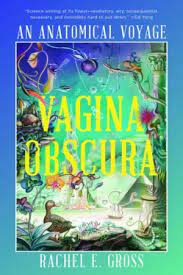
Vagina Obscura: An Anatomical Voyage , by Rachel E. Gross (2022) is a remarkable combination of information about anatomy, health, history, science, biography, and sociology related to the female organs. It is also my choice for the topic of Health for the Nonfiction Reader Challenge . The book organizes these organs into separate chapters according to their presenting characteristic: Desire ( Glans Clitoris ) Wholeness ( Internal Clitoris ) Resilience ( Vagina ) Protection ( Vaginal Microbiome ) Creation ( Egg Cell ) Power ( Ovaries ) Regeneration ( Uterus ) Beauty ( Neovagina ) Each chapter focuses on the particular body part using the stories of medical personnel, specific women, and historical figures to give background and information about the organ’s function, development and physical description. Although the narrative often includes detailed biological and technical data, Gross makes it as interesting as a novel. I found myself unable to put the book down ...

Who We Are and How We Got Here

Image
David Reich is a professor in the Department of Genetics at Harvard Medical School, and an innovator in the field of ancient human DNA analysis. In  Who We Are and How We Got Here (2018) he explains his work, referring to the “ancient DNA revolution” as the ability to extract DNA from ancient bones and sequence ancient genomes. It has revealed wide-ranging information about the interactions and migrations of different ancient humans throughout the world. I appreciated that at the beginning of each chapter there is a diagram of the migrations covered in the chapter. This was a useful overview of the information. Chapter 1 begins with a very clear explanation of what DNA is and how it is extracted from ancient bone. The information and terminology presented in this chapter is referred to throughout the book, so the it is helpful for the reader to pay attention. That being said, with this background information, the further explanations are very clear to follow. The research that ...

The Smart Neanderthal: bird catching, cave art & the cognitive revolution

Image
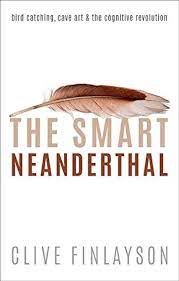
I am extremely interested in the Neanderthals, so I’ll read any book that gives me more information about them. I’ve already written a review of Kindred: Neanderthal Life, Love, Death and Art (post of February 24, 2022) and The Neanderthals Rediscovered (post of February 3, 2023). I recently read The Smart Neanderthal: Bird catching, cave art & the cognitive revolution by Clive Finlayson, 2019, and learned a fascinating aspect of the Neanderthals that I hadn’t read in other books. The book is appropriate for the category Science for the 2024 Nonfiction Reader Challenge . Finlayson is a zoologist and a paleontologist, as well as the Director of the Gibraltar Museum. This book is based on his excavations of Gorham’s Cave in Gibraltar, which is believed to be the last known site of the Neanderthals. He explains that his two scientific passions are the study of birds and of Neanderthals, and his research shows that these two passions are closely connected. Discoveries about th...

Lady Sapiens: Breaking Stereotypes about Prehistoric Women

Image
In texts and films about people who lived in prehistoric times, they are often referred to as ‘prehistoric man,’ ‘cavemen,’ etc., which seems to ignore the role of women. And previous assumptions about the lives of those people were that men hunted and women stayed home tending the fire and taking care of children. Through reading I’ve done over the last few years, I’ve come to learn that women played a more active role in all aspects of the life of prehistoric hunter-gatherers. Lady Sapiens: Breaking Stereotypes about Prehistoric Women, by Thomas Cirotteau, Jennifer Kerner, and Éric Pincas (2021), presents the evidence that proves what these more active roles were. I’m very interested in this aspect of archaeology, and this book fits the category of History for the 2024 Nonfiction Readers’ Challenge (hosted by  https://bookdout.wordpress.com/2024-nonfiction-reader-challenge-host/ ). At the beginning of the book are four pages of timelines and drawings titled "Key Dates and E...

2024 Nonfiction Reader Challenge

Image
For the fourth year in a row, I’m taking on the Nonfiction Reader Challenge. I already have a few books lined up for some of the categories, and I’m looking forward to reading reviews from other Nonfiction Readers for inspiration for the others. The Challenge is hosted by Book’d Out ( https://bookdout.wordpress.com/ ), a book review blog by Shellyrae in Australia (a woman who reads so many books in a year, it’s amazing!). Her blog explains How it Works: “You can select, read and review a book from the categories listed below during the year for a total of up to 12 books; OR select, read and review any nonfiction book. A book may be in print, electronic or audio format.” The Goals are: Nonfiction Nipper:  Read & review 3 books, from any 3 listed categories Nonfiction Nibbler : Read & review 6 books, from any 6 listed categories Nonfiction Nosher : Read & review 12 books, one for each category Nonfiction Grazer : Read & review any nonfiction book. Set ...

The 2023 Nonfiction Reader Challenge Completed

Image
This year I read fewer books than usual, for some reason. Maybe it’s because I did a lot more travelling and I don’t bring books – I prefer to focus on where I am and, of course, books are heavy. I need reading material only in the airport, so I bring a book or magazine that I plan to leave behind for others. In any case, I managed to complete this year’s Nonfiction Reader Challenge, but not as a “Nonfiction Nosher” (reading and reviewing 12 books, one for each category). I read only eight nonfiction books, with one in each of seven of the challenge categories. So that makes me a “Nonfiction Nibbler,” reading and reviewing 6 books, from any 6 listed categories. My choices: Science: The Neanderthals Rediscovered: How a Scientific Revolution is Rewriting Their Story Sport: How the Hell Did I Get Here? Biography: Maria Theresa of Austria: Full-blooded politician, Devoted wife and Mother-to-all Published in 2023: Ashes & Stones: A Scottish Journey in Search of Witches & W...

Breath: The New Science of a Lost Art

Image
The final book I read for the 2023 NONFICTION READER CHALLENGE is in the category Health . This book, Breath: The New Science of a Lost Art by James Nestor, 2020, received fairly good reviews on various blogs and was also positively reviewed by a blogger earlier this year for the Nonfiction Reader Challenge. But I don’t understand what all the praise is about. This book is about Nestor’s personal experiences with different breathing techniques, but with very poorly supported “research.” The book’s blurb claims that “humans have lost the ability to breathe correctly, with grave consequences. Science journalist James Nestor travels the world to discover what went wrong and how to fix it.”   However, for most of the information he ‘discovers,’ he gives weak or no support. The notes at the end of the book are rather random. So it was hard for me to believe some of his claims. The first aspect of breathing he focuses on is ‘mouthbreathing,’ noting that breathing through the mouth ...