Posts

The Neanderthals Rediscovered: How a Scientific Revolution is Rewriting Their Story

Image
My first book review for the 2023 Nonfiction Reader Challenge is in the category Science . One of my amateur interests is archaeology, and I find the Neanderthals particularly interesting. Fortunately, most of what we know about our hominid cousins has been found or studied fairly recently – mostly in the last ten years. Last year I enjoyed Kindred: Neanderthal Life, Love, Death and Art , 2020, by Rebecca Wragg Sykes (see my post of February 24, 2022). But then at the end of the year I found a book that was published earlier (2013, 2015 and updated in 2022): The Neanderthals Rediscovered: How a Scientific Revolution is Rewriting Their Story by Dimitra Papagianni and Michael A. Morse (revised and updated edition). It’s hard not to compare the two books, so I would have to say I enjoyed Kindred better. Somehow Wragg Sykes’s writing was both more scientific and more enthusiastic about the subject. But perhaps it’s because much of the information in The Neanderthals Rediscovered was ...

2023 Nonfiction Reader Challenge

Image
For the third year in a row, I am taking on the Nonfiction Reader Challenge inspired by the blog book'd out.  And also for the third year in a row, I plan to become a "Nonfiction Nosher," reading and reviewing 12 books, one for each category presented. The Challenge is also for a "Nonfiction Nipper," reading 3 books from any 3 of the categories, a "Nonfiction Nibbler," reading 6 books from any 6 categories, and a "Nonfiction Grazer," reading and reviewing any nonfiction books (set your own goal). See the Challenge information at: https://bookdout.wordpress.com/2023-nonfiction-reader-challenge/ Reading non-fiction is not a challenge for me, however, and on this blog I review each of the nonfiction books I read. But I like the challenge of finding books in categories that I don’t normally choose. This year I might find it challenging to enjoy reading books in the categories of sport and social media (and published in 2023?), but maybe those cho...

2022 Non-Fiction Reader Challenge Completed

Image
I started the 2022 Non-Fiction Reader Challenge at the beginning of the year, joining again after enjoying the concept in 2021. As in that year, I chose to read a book in each of the twelve categories, some of which I wouldn’t have chosen otherwise (like economics, weather, or linked to a podcast). The categories, with my choices: 1.  Social History - Kindred: Neanderthal Life, Love, Death and Art by Rebecca Wragg Sykes 2.  Popular Science - The Big Necessity: Adventures in the World of Human Waste by Rose George 3.  Language - Word by Word: The Secret Life of Dictionaries by Kory Stamper 4.  Medical Memoir - My Lobotomy: A Memoir by Howard Dully 5.  Climate/Weather - The Secret World of Weather by Tristan Gooley 6.  Celebrity - The Hottentot Venus by Rachel Holmes 7.  Reference - The Worst-Case Scenario Survival Handbook by Joshua Piven and David Borgenicht 8.  Geography - A Phenomenology of Landscape by Christopher Tilley 9.  Linked to ...

The Secret World of Weather

Image
The full title of this book is The Secret World of Weather: How to read signs in every cloud breeze, hill, street, plant, animal, and dewdrop. I read this for the category Climate/weather of the 2022 NONFICTION READER CHALLENGE . It was written by Tristan Gooley, 2021. Gooley has written several books about awareness in nature (eg, How to Read Water, The Lost Art of Reading Nature’s Signs, The Nature Instinct), but this is the first one I became aware of. I was particularly interested in the topic because I love hiking, birdwatching, gardening, and generally being in nature. And yet I don’t know much about reading signs of weather other than rain clouds on the horizon. The book is divided into 22 chapters, each one focusing on different aspects of nature that affect and reveal the weather. For example: How to Feel the Wind; Dew and Frost; Rain, Hail and Snow; The Trees; Plants, Fungi and Lichens; The Animals; and so on. Although I read through the book, for me it is the kind of ...

The Worst-Case Scenario Survival Handbook

Image
For the category Reference of the 2022 NONFICTION READER CHALLENGE , I chose The Worst-Case Scenario Survival Handbook, by Joshua Piven and David Borgenicht, 1999. The disclaimer at the beginning of the book starts: “When a life is imperiled or a dire situation is at hand, safe alternatives may not exist. To deal with the worst-case scenarios presented in this book, we highly recommend – insist, actually – that the best course of action is to consult a professionally trained expert. DO NOT ATTEMPT TO UNDERTAKE ANY OF THE ACTIVITIES DESCRIBED IN THIS BOOK YOURSELF.” (upper-case in book) Presumably the idea is to undertake the activities described in this book only when you are in the respective worst-case scenario. Fortunately, I have never been in any of these scenarios (at least not yet), but I was interested to see what some of the scenarios were and what is recommended. I started skimming through this book in a bookstore, and ending up buying it to continue reading. The book...

Dirty John and Other True Stories of Outlaws and Outsiders

Image
For the category Linked to a Podcast of the 2022 NONFICTION READER CHALLENGE , I chose Dirty John and Other True Stories of Outlaws and Outsiders, by Christopher Goffard, 2018. This was a difficult category for me because I don’t listen to podcasts much, and the two I’ve listened to aren’t linked to books. I chose this one because I saw the Netflix film, about a charismatic con man who over time terrorizes the woman he marries, and thought I’d get more insight into the motives and style of sociopaths who persuade other people into believing them. But this book didn’t do that. There are 15 chapters, each focused on a different person or person’s story. But many of them didn’t seem to be either an outlaw or an outsider (other than the fact that everyone is an outsider somewhere). In fact, throughout the book, I kept wondering what the stories had in common so that they were chosen for the same book. The blurb on the back includes: “… these pieces show people at their most brave,...

Queens: Women in Power Through History

Image
The book I read for the 2022 NONFICTION READER CHALLENGE in the category Published in 2022 is Queens: Women in Power Through History by Phyllis G. Jestice, 2022 . I have always been interested in biographies, especially of women who were unusual for their time. Unfortunately, women in power have been unusual throughout time, and there is not much information available about most of those who became rulers. So this book seemed like a treasure trove for me. Although this book does not give much information about the lives of these women, it includes many examples, from Europe, Africa, Asia and South America. And there is an interesting focus on how and why these women became queens, and what their rule was like. The “Queens” referred to in the book were not necessarily queens, but were in some way a ruler for a period of time. For example, some women who were married to rulers were able to wield power because their husbands consulted them or were unable to rule themselves. Some wo...

Four Lost Cities: A Secret History of the Urban Age

Image
This book is divided into four sections, each one for one of the cities, and further divided into three chapters. The four cities are presented in chronological order from oldest to most recent: Ç atalhöyük (Turkey), 7500-5700 BCE; Pompeii (Italy), 700 BCE-79 CE; Angkor (Cambodia), 800-1431 CE; and Cahokia (United States), 1050-1350 CE. Newitz travelled to each of these places and spoke to archaeologists on site as well as other experts on each area through visits or telephone interviews. She certainly was thorough in her research. The information given is an overview of each site itself, its history, a description of what it’s like today, and reasons it eventually became uninhabited (not “lost”). Despite the title, Newitz explains in the introduction that these cities are not “lost;” this was just the viewpoint of European explorers who later “discovered” them. Each city was known by the local population even after the inhabitants abandoned it. While Newitz gives detailed informat...

Wayfinding: The Art and Science of How We Find and Lose Our Way

Image
I love the subtitle of the book, Wayfinding: The Art and Science of How We Find and Lose Our Way , by Michael Bond, 2020, referring to wayfinding as both an art and a science. And that is what Bond covers in this book. There is information about how people and animals navigate, with interesting examples, as well as different reasons people walk, get lost and find – or don’t find – their way back. This book also gave me a better idea of what it is to be lost – both geographically and psychologically. The introduction starts: “If you have ever wondered what it feels like to be lost, my advice is, don’t try it. The experience is terrifying and often traumatizing. People who are truly lost are usually incapable of making decisions that could save their lives, and they may even think they are going to die. They lose their minds as well as their bearings. It is something of a miracle that we don’t get lost more often. The physical world is infinitely complex, yet most of us are able to...

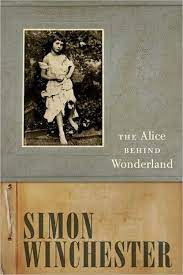
The Alice Behind Wonderland

Image
This book, The Alice Behind Wonderland , by Simon Winchester, 2011, is claimed to be about the girl who inspired Charles Dodgson (pen name Lewis Carroll) to write Alice's Adventures in Wonderland . However, the title is misleading – there isn’t much about Alice Liddell except for basic facts about her life. Most of the book focuses on Dodgson’s photography, with background information about the development and state of photography at the time. By the end of the book (only 110 pages with index) I didn’t really know what it was about. There were too many “tidbits” given about the Liddell family, Dodgson’s work, his photography, and descriptions of photos that the reader doesn’t see. But there is no connection among them – they read like a list. I had read Simon Winchester’s book, The Surgeon of Crowthorne (see my post of March 17, 2021), also known as The Professor and the Madman in the USA and Canada, and liked his writing style and attention to detail. But the information and s...

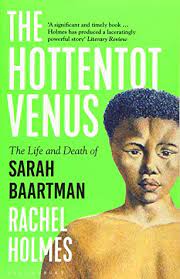
The Hottentot Venus: The Life and Death of Sarah Baartman

Image
The book I read for the 2021 NONFICTION READER CHALLENGE in the category Celebrity is The Hottentot Venus: The Life and Death of Sarah Baartman , by Rachel Holmes, 2007. I had heard about this woman many years ago, and her story fascinated me because of how degrading it seemed. She was one of the most famous women in England in the early 19 th century mainly because of her large buttocks and the perceived size of her vulva. Saartjie Baartman (or Sarah in English) was born in 1789 in the region of the Gamtoos River Valley in the Cape Colony of South Africa, a member of the Khoisan people, known in English of the time as Hottentots. She became a servant/slave to a man who eventually smuggled her to England and functioned as her “manager.” England at this time was becoming ever more interested in the exotic animals and people of Africa and Asia that they heard about through the travels of the explorers and anthropologists of the era. Baartman was put on display as an ‘exotic’ curios...

A Phenomenology of Landscape

Image
The book I chose for the 2022 NONFICTION READER CHALLENGE in the category Geography is A Phenomenology of Landscape, by Christopher Tilley, 1994. This book was recommended reading for a course I took about the Archaeology of Pilgrimage. While it wasn’t directly relevant to my course, it presented a number of ideas that relate to interests I have in ancient monuments and spiritual sites. And his overview of what he proposes in the book was interesting for me. When I read about Stonehenge in England or the Ring of Brodgar in the Orkney Islands, I wonder why they were constructed in their particular location. In his introduction, Tilley writes that “The key question addressed is deceptively simple: why were particular locations chosen for habitation and the erection of monuments as opposed to others?” He proposes that it is not merely due to “factors of the environment such as relief, climate, soils, water supply and the seasonal availability of exploitable resources,” which he refer...