Posts

Rationality: What It Is, Why It Seems Scarce, Why It Matters

Image
The final book I read for the 2021 NONFICTION READER CHALLENGE in the category Published in 2021 is Rationality: What It Is, Why It Seems Scarce, Why It Matters , by Steven Pinker, 2021. Steven Pinker is a cognitive psychologist at Harvard University and has written 8 books for general audiences on topics such philosophy, social relations and language. Being interested in language and how it develops, I’ve read his books The Language Instinct and The Sense of Style . I found that his writing is coherent and thought-provoking, so I wanted to try another theme and “rationality” seems particularly appropriate these days when it does, indeed, seem scarce. His book is structured in such a way that each chapter builds on the ideas and information in the previous ones. He starts with a focus on the ways that ‘rationality’ can be defined, and how it is evident or lacking in human beings. His examples include many logic problems, with explanations of why so many people cannot solve the pr...

Garden Bird Behaviour

Image
The book I read for the 2021 NONFICTION READER CHALLENGE in the category Hobbies is Garden Bird Behaviour: How to recognize and interpret everyday bird activities, by Robert Burton, 2005. I originally bought this book to learn more about the habits of some common birds in my garden – coal & marsh tits, sparrows, blackbirds, crows, (European) robin, and occasional newcomers. This book, however, gives information in areas common to all birds (e.g., “Birds try to choose food that gives a good return of energy for time spent gathering it. The basic rule is: not too big, not too small, but just right. For instance, Spotted Flycatchers prefer to hawk for medium-sized insects, such as hoverflies and blue-bottles.”). This guides readers to find out information by observing birds themselves. So it’s a beginner’s guide to bird-watching. Burton writes from a very personal viewpoint – the birds he observes, the seasonal changes that affect the birds’ behavior, and the memories he has of ...

Visiting Mrs. Nabokov and Other Excursions

Image
The book I read for the 2021 NONFICTION READER CHALLENGE in the category Essay Collection is Visiting Mrs. Nabokov and Other Excursions , by Martin Amis, 1993. I’ve never been interested in essay collections. Maybe I had to write too many essays throughout school and university. But any time I read a review of an essay collection that sounds interesting, I check it out in a bookstore and put it down again. So to find a book for the ‘essay collection’ category of this Reader Challenge, I decided to browse the essay shelf in the library. First the title caught my eye, and then the first sentence of the blurb on the back: “Fuelled by innumerable cigarettes, Martin Amis provides dazzling portraits of contemporaries and mentors alike: …” then follows a list of the people mentioned in the separate chapters. I was familiar with the author’s name, but had never read anything he wrote. Conversations with different people (of different levels of interest for me) sounded like something I cou...

The Artist's Way for Retirement

Image
The book I read for the 2021 NONFICTION READER CHALLENGE in the category Self-Help is The Artist’s Way for Retirement , by Julia Cameron, 2016 (subtitled It's Never Too Late to Discover Creativity and Meaning ). Although I don’t read – or need – self-help books, I needed to find one for this reading challenge. And this book seemed to offer some ideas that I could use. Cameron is an artist who has also written many books about creativity and the creative process. I had heard about her book, The Artist’s Way (written with Emma Lively), but have never read it. She explains that it “spelled out, in a step-by-step fashion, just what a person could do to recover–and exercise–their creativity.” Although I didn’t feel that my creativity needed to be “recovered,” it could certainly be “exercised” more vigorously. But before I looked into getting that book, I learned about this one and decided it was more appropriate for me since I was approaching retirement. In the introduction, Camero...

The Great Mortality

Image
In the category Disease for the 2021 NONFICTION READER CHALLENGE , I read The Great Mortality: An intimate history of the Black Death, the most devastating plague of all time by John Kelly, 2006. It was particularly interesting to read about a pandemic during the Covid-19 pandemic. The plague is now often referred to as the Black Death, but it was known to Europeans at that time as The Great Mortality, which Kelly calls “the greatest natural disaster in human history.” In the introduction, he mentions writing about a patient who had AIDS in the early 1990s [ in a previous book ] , when there were no effective treatments, and writes, “A hallmark of a pandemic disease is its ability to destroy worlds, not just individuals, but it was one thing to know that, quite another to witness it.” And, he adds what was at that time “newly emerging illnesses such as Ebola fever, Marburg disease, Hantavirus pulmonary syndrome, SARS, and avian flu.” So, adding the Covid-19 virus brings this up to ...

The Bagel: The Surprising History of a Modest Bread

Image
This book by Maria Balinska (2008) is, as the title states, about bagels. Why was I interested in reading about such a seemingly ‘modest’ food item as the bagel? First, I am a born and bred New Yorker, and fresh bagels from a bagel bakery had always been a part of my personal cuisine. Since living in other countries and travelling through other continents, however, I haven’t been able to find anything similar to a New York bagel. Either there is no equivalent at all or an item referred to as a bagel is merely a white roll with a hole. No comparison. However, I have been in places that claim to be the ‘birthplace’ of the bagel, but – curiously – they don’t sell anything resembling it now. Second, I am interested in the history of food and of foods. For example, I’ve read about chocolate, olives, olive oil, food in prehistory, beer, salt – but I was excited to find a book about the bagel. There are many myths surrounding its creation, so I thought I would find out the truth in this b...

Neither Here Nor There: Travels in Europe

Image
  The book I read for the 2021 NONFICTION READER CHALLENGE in the category Travel is Neither Here Nor There: Travels in Europe , by Bill Bryson, 1991. I had read a number of books by Bill Bryson, and had enjoyed them very much.   His book on the English Language, Mother Tongue: The English Language , and on American language and culture, Made in America, were both very funny as well as informative. Another informative and readable book is A Short History of Nearly Everything. I also enjoyed his book, Shakespeare , even though I felt there were some unsubstantiated claims made in it. So I thought it would be a good idea to choose his travel book, recounting his 1990 trip through Europe from Hammerfest, Norway to Istanbul, Turkey. The trip he takes retraces the travelling he did with a friend when he was a student. Perhaps because this book was written about 30 years ago and both travel and Europe have changed so much since then, it was rather disappointing as a travel boo...

The Sea Around Us

Image
The book I read for the 2021 NONFICTION READER CHALLENGE in the category Oceanography is The Sea Around Us , by Rachel Carson, 1961 (with an updated bibliography and introduction in the 2018 edition). I had to pick a book for this category, even though it’s not a subject that I would normally choose to read about. I’m more interested in aspects of the ocean where it meets land – islands and coastal areas, for example. The first book I ordered was The Boundless Sea by David Abulafia; the subtitle is ‘A Human History of the Oceans,’ and that seemed to combine my interests with the topic of oceanography. Unfortunately, that book (paperback version) is more than 1000 pages, and with the other activities that occupy my time, I didn’t think I’d be able to read this within a month. So, it’s still on my to-read list, but I then chose the book by Rachel Carson, which I had heard of as being ‘a classic.’ And it’s much shorter than 1000 pages. I know a bit about Rachel Carson, but more in co...

The Norman Conquest

Image
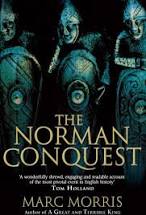
The book I read for the 2021 NONFICTION READER CHALLENGE in the category Wartime Experiences is The Norman Conquest , by Marc Morris, 2012. I learned about the Norman Conquest when I was in school and know the date 1066. But schoolchildren in Britain probably learn more about it than I did in the United States. At least that’s the impression I got from the introduction.   In referring to the Bayeux Tapestry, Morris writes, “perhaps the most famous and familiar of all medieval sources, at least in England, where we are introduced to it as schoolchildren, and where we encounter it everywhere as adults: in books and on bookmarks, postcards and calendars, cushions and tea towels, key rings, mouse-mats and mugs.” I have heard of this tapestry (which is really an embroidery), but never learned about it in school. It is familiar-looking to me, but I have never studied it closely. That has now changed. After reading this book, I have a new interest in this incredible piece of work and...

From Black Land to Fifth Sun

Image
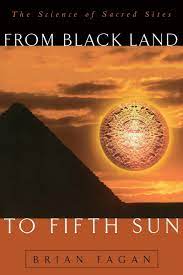
My choice in the category Indigenous Cultures for the 2021 NONFICTION READER CHALLENGE focuses on different cultures in prehistory. The title refers to the area covered in the book, from Central America to the Near East. “Black Land” is what the ancient Egyptians called their homeland, referring to the effect of the Nile on the surrounding land. “The World of the Fifth Sun” is the land of the Aztecs, referring to their creation myth. Interestingly, though, this is not the way the book is organized. Both chapters referring to these two areas are at the end of the book, instead of beginning with Black Land and ending with Fifth Sun. In fact, I couldn’t figure out why the chapters were organized as they were – they are not arranged by location, by time, or by topic. The subtitle is The Science of Sacred Sites , and this is what attracted me to this book. I have an amateur interest in Archeology and Anthropology, and I have often wondered how archeologists determine that a figurine f...

What to Eat

Image
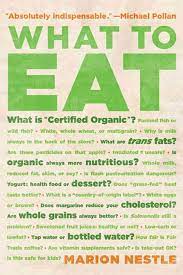
What to Eat , by Marion Nestle, 2006, is described on the back cover as “the one book that tells you everything you need to know about food, with clarity, insight, wit, and wisdom.” It is certainly comprehensive and very readable, but it would be more accurate to indicate that it has everything you need to know about food sold in supermarkets – not about which types of food to eat. Marion Nestle was a Professor of Nutrition, Food Studies and Public Health at New York University. She is well known as a public health advocate and an opponent of processed (junk) food and the major international food corporations that produce it and control most of the food sold in supermarkets throughout the world. Despite the title, Nestle doesn’t tell the reader what to eat, but gives enough information about the range of foods available in supermarkets to help us make up our own minds – or at least to better understand what we’re buying. When she mentions her own food or buying preferences, she exp...

The Search for Richard III: The King's Grave

Image
Most of us know a bit about Richard III – the hunchbacked killer of his two nephews, the Princes in the Tower of London. In Shakespeare’s play he is evil, scheming, and a pretender to the throne. However, there is evidence that he was loyal to his brother, King Edward IV, a fair and just king during his own short reign, and not clearly connected to the disappearance of his nephews. What we do know for sure is that he was killed on 22 August 1485 at the Battle of Bosworth, losing to Henry Tudor, who became King Henry VII. Legend had it that he was hastily buried in the Church of the Greyfriars without the pomp befitting a king who dies in battle. Fifty years after the battle, the church was destroyed at the time of the dissolution of the monasteries and Richard’s grave was never found. The Search for Richard III: The King's Grave , by Philippa Langley and Michael Jones, 2013, details the archeological search and discovery of Richard III’s skeleton in a car park on the site where...