Posts

Rasputin: Faith, Power, and the Twilight of the Romanovs
Image
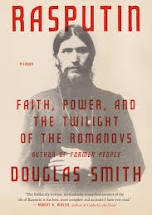
There are so many tales about Rasputin -- the Mad Monk who cast his spell over the last Tsarina of Russia and was a cause of the downfall of the Romanovs. He had a strange power to relieve the hemophilia symptoms of the Tsarevich Alexei, heir to the throne; he had perverse and unquenchable sexual appetites; he was the very personification of evil. Except that most of what we think we know about Rasputin is not true. In this biography by Douglas Smith, 2016, a clearer and more fascinating life of Rasputin is presented. Smith is an award-winning historian, and earlier had worked for the US State Department in the former Soviet Union and as a Russian translator and affairs analyst for Radio Free Europe. In the introduction to the book Smith writes that he was determined to search out the facts of Rasputin’s life by conducting extensive research, which he claims led him to seven countries, “from Siberia and Russia, across Europe, to Britain and finally the United States.” In addition, he...
The Surgeon of Crowthorne: a tale of murder, madness and the Oxford English Dictionary

Image
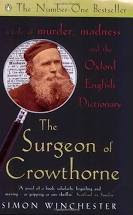
Truth really can be stranger than fiction. This book, by Simon Winchester, 1998, is about the relationship between an inmate in an insane asylum and the lexicographer responsible for compiling the first Oxford English Dictionary in the 19th century. It was the subtitle of the book that attracted me first: a tale of murder, madness and the Oxford English Dictionary.   Murder and madness certainly don’t seem to have anything to do with a dictionary and – when I found out the book was about how this impressive dictionary was first compiled – I was even more interested in reading it. The Oxford English dictionary was the first one in English that aimed to include every word in the language. As part of that endeavor, citations of the first use of the word and its history would be included (where possible). This was such a huge undertaking that the lexicographer in charge, James Murray, enlisted the help of volunteer readers throughout the English-speaking world. This help involved hav...

Extra Virginity: The Sublime and Scandalous World of Olive Oil

Image
My book choice in the Food category for the 2021 NONFICTION READER CHALLENGE is Extra Virginity: The sublime and scandalous world of olive oil , by Tom Mueller, 2012. The book is an overview of the history of olive oil: where it has been grown, how it has been produced; what it has been used for; and its cultural significance through the ages. Much of the book, however, is about the adulteration and fraud involved in olive oil production. He writes: “Olive oil is one of the most frequently adulterated food products in the EU; within Europe, the problem is particularly acute in Italy, the leading importer, consumer, and exporter of olive oil and the hub of the world olive oil trade.” The fraud involves mixing olive oil with other types of oil, but packaging it as “extra virgin” olive oil. From the packaging, it seems, it is difficult to know if the product is pure. Mueller gives information about how to taste – and test – olive oil in order to know if it’s the genuine, unadultera...

The Astaires: Fred & Adele

Image
I have been a Fred Astaire fan for most of my life, and I watched his films with Ginger Rogers, and others, whenever they were on television as I was growing up. Now I have the entire collection on DVD, and they still delight me. The Astaires: Fred & Adele , by Kathleen Riley (2012), was the first book I have come across that focuses only on the life and career of Fred and Adele Astaire together. Since it had the support and input of Fred’s daughter, Ava Astaire McKenzie, I figured it would be accurate and respectful, and it is. I knew quite a lot about Fred Astaire’s life (mostly from the book, The Fred Astaire and Ginger Rogers Book , by Arlene Croce, 1972), so I knew that he started his career as the partner of his sister Adele. And from most accounts, Adele was the more talented of the pair. It is hard to believe that there could be a more talented dancer of that time than Fred, however. Since there is no film footage (that I’m aware of) of Adele and Fred dancing together, ...

The Time Traveller's Guide to ... England

Image
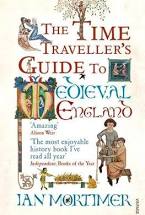
I read two of Ian Mortimer's Time Traveller's Guides: to Medieval Engliand (2008) and to Elizabethan England (2012).  At first, I wanted  to read about Elizabethan England since I’m interested in the Tudors, in the Elizabethan Era and in Shakespeare. But I realized that much of the information about England in medieval times would still be true in Elizabeth’s reign. So it seemed to make more sense to read the earlier Guide first, and then get a better idea of how life – and England – had changed. These are principally history books, but with quite a difference. Mortimer writes as if the reader were a tourist who will visit Medieval and Elizabethan England. He addresses the reader directly; for example, in describing the approach to the city of Exeter (in the Medieval book) he writes,”  It is the cathedral which you will see   first. As you journey along the road you come to a break in the trees and there   it is, massive and magnificent, cresting the hill top in...

Longitude: The True Story of a Lone Genius Who Solved the Greatest Scientific Problem of His Time

Image
My second book for the 2021 NONFICTION READER CHALLENGE is in the category of Inventions – “Longitude: The True Story of a Lone Genius Who Solved the Greatest Scientific Problem of His Time,” by Dava Sobel, 1995. Dava Sobel is an “award-winning former science reporter for the New York Times , and writes frequently about science for several magazines, including Audubon , Discover , Life and Omni ,” according to the inner book jacket. The ‘Greatest Scientific Problem’ before the end of the 18 th century was how to determine longitude throughout a sea voyage. In 1714 the British Parliament created the Longitude Act, which set a huge monetary prize for a “Predictable and Useful” means of determining longitude. The ‘Lone Genius’ of the title is John Harrison, a self-taught Yorkshire clockmaker, who “invented a clock that would carry the true time from the home port, like an eternal flame, to any remote corner of the world.” But he was not awarded the prize money until 1773 (although n...

The Life & Death of St. Kilda: The Moving Story of a Vanished Island Community

Image
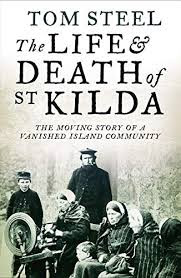
  The blurb at the back of this book by Tom Steel says, “The story of St. Kilda has seized the imagination of people worldwide.” But I had never heard of this island before I found this book while on vacation on the Isle of Skye, Scotland. St. Kilda is a group of the outermost islands of the Hebrides, 40 miles (64 km) west-northwest of the nearest island of the Outer Hebrides, North Uist,  w hich is a 2½-hour boat trip today. The islands are home to a variety of sea birds, including the world’s largest colony of gannets, as well as two types of wild sheep. It was in this extremely remote, small area that a community of people lived for at least 2000 years. They existed mainly on the meat and eggs of the sea birds and lived in a row of stone houses along one “street” on Hirta, the largest island of the group. There was little interaction between Hirta and the rest of the world, except for the British postal service and a government-supplied nurse. In 1930, the last nurse sent ...

Historical Heroines: One Hundred Women You Should Know About

Image
This book, by Michelle Rosenberg and Sonia D. Picker, certainly  has a catchy title – I wanted to know more about women who have made important contributions to the world but have been ignored in history books. The authors chose 100 women they felt were “interesting, compelling or just fun.” But, unfortunately, this book was a disappointment. First of all, it’s unclear what the authors meant by ‘heroine’. They write that “what unites our cast of characters is that they have all suffered being miscast, type cast or simply cast aside.” But quite a few women chosen do not fit any of those three categories. And many are just not my idea of a ‘heroine.’ For example: Madam Stephanie Queen St. Clair was a gangster and a murderer; Mary Willcocks was a con artist; Maw Broon is a cartoon character; and the ‘Queen of the Amazons’ is a character from mythology (why not include the mythological goddesses?). And in the chapter on Madam Sacho there is no information about her at all; it is even...

The Great Detective: The Amazing Rise and Immortal Life of Sherlock Holmes

Image
  First, let me make it clear that I am a Sherlock Holmes fan, and have been one since I was 13. So when I heard about the book, The Great Detective: The Amazing Rise and Immortal Life of Sherlock Holmes by Zach Dundas, it was clear that I would have to read it. The book follows the search of Dundas – also a lifelong Holmes fan – as he sets out to learn “Why have Sherlock Holmes, John Watson, and the mysteries Conan Doyle challenged them to solve not only endured, but thrived?” Unfortunately, he never really answers that question, but perhaps it cannot really be answered. Instead, he learns a lot about clubs and venues devoted to Holmes, travels to places where some of the stories took place, and unearths a lot of information about the background of the author, the characters and stories as well as the history of the actors, performances, and related media that the original stories inspired. On that level, it’s an extremely detailed book – but only for fans of Sherlock Holmes, or...

The Five: The Untold Lives of the Women Killed by Jack the Ripper

Image
As my book choice in the category of Biography for the 2021 NONFICTION READER CHALLENGE , I chose this book  by Hallie Rubenhold. It won the Baillie Gifford Prize for Non-Fiction 2019. Rubenhold is “a social historian whose expertise lies in revealing stories of previously unknown women and episodes in history” according to the book’s jacket. What first attracted me to this book is that I have read a lot about Jack the Ripper and his crimes (being interested in true crime), but realized that I didn’t know much about his victims, other than their names. As Rubenhold points out, one of the few things everyone thinks they know about the victims is that they were prostitutes. However, Rubenhold’s research reveals that only one of the five worked as a prostitute; there is no evidence that the others were. They were all poor and often lived on the street, and were also women at a time when it was nearly impossible for a woman to survive alone. There is nothing in the book about the ...

2021 Nonfiction Reader Challenge

Image
I read about the 2021 Nonfiction Reader Challenge on the website Book'd Out during the final week of 2020. The website's stated aim of this challenge is "to encourage you to make nonfiction part of your reading experience during the year." Since nonfiction is already part of (or most of) my reading experience each year, I thought it would be interesting to rise to this challenge. "The challenge will run from January 1st to December 31st 2021. Participants may join at any time up until December 1st 2021." There are 3 goals to choose from: Nonfiction Nipper: Read 3 books, from any category Nonfiction Nibbler: Read 6 books, from any category Nonfiction Know-It-All: Read 12 books, one for each category The categories: Biography Travel Self-help Essay Collection Disease Oceanography Hobbies Indigenous Cultures Food Wartime Experiences Inventions Published in 2021 Of course, considering myself a nonfiction know-a-lot, I'm planning to reach the goal of Nonficti...