Posts

Four Lost Cities: A Secret History of the Urban Age

Image
This book is divided into four sections, each one for one of the cities, and further divided into three chapters. The four cities are presented in chronological order from oldest to most recent: Ç atalhöyük (Turkey), 7500-5700 BCE; Pompeii (Italy), 700 BCE-79 CE; Angkor (Cambodia), 800-1431 CE; and Cahokia (United States), 1050-1350 CE. Newitz travelled to each of these places and spoke to archaeologists on site as well as other experts on each area through visits or telephone interviews. She certainly was thorough in her research. The information given is an overview of each site itself, its history, a description of what it’s like today, and reasons it eventually became uninhabited (not “lost”). Despite the title, Newitz explains in the introduction that these cities are not “lost;” this was just the viewpoint of European explorers who later “discovered” them. Each city was known by the local population even after the inhabitants abandoned it. While Newitz gives detailed informat...

Wayfinding: The Art and Science of How We Find and Lose Our Way

Image
I love the subtitle of the book, Wayfinding: The Art and Science of How We Find and Lose Our Way , by Michael Bond, 2020, referring to wayfinding as both an art and a science. And that is what Bond covers in this book. There is information about how people and animals navigate, with interesting examples, as well as different reasons people walk, get lost and find – or don’t find – their way back. This book also gave me a better idea of what it is to be lost – both geographically and psychologically. The introduction starts: “If you have ever wondered what it feels like to be lost, my advice is, don’t try it. The experience is terrifying and often traumatizing. People who are truly lost are usually incapable of making decisions that could save their lives, and they may even think they are going to die. They lose their minds as well as their bearings. It is something of a miracle that we don’t get lost more often. The physical world is infinitely complex, yet most of us are able to...

The Alice Behind Wonderland

Image
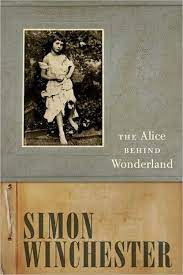
This book, The Alice Behind Wonderland , by Simon Winchester, 2011, is claimed to be about the girl who inspired Charles Dodgson (pen name Lewis Carroll) to write Alice's Adventures in Wonderland . However, the title is misleading – there isn’t much about Alice Liddell except for basic facts about her life. Most of the book focuses on Dodgson’s photography, with background information about the development and state of photography at the time. By the end of the book (only 110 pages with index) I didn’t really know what it was about. There were too many “tidbits” given about the Liddell family, Dodgson’s work, his photography, and descriptions of photos that the reader doesn’t see. But there is no connection among them – they read like a list. I had read Simon Winchester’s book, The Surgeon of Crowthorne (see my post of March 17, 2021), also known as The Professor and the Madman in the USA and Canada, and liked his writing style and attention to detail. But the information and s...

The Hottentot Venus: The Life and Death of Sarah Baartman

Image
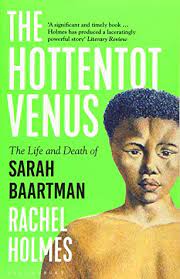
The book I read for the 2021 NONFICTION READER CHALLENGE in the category Celebrity is The Hottentot Venus: The Life and Death of Sarah Baartman , by Rachel Holmes, 2007. I had heard about this woman many years ago, and her story fascinated me because of how degrading it seemed. She was one of the most famous women in England in the early 19 th century mainly because of her large buttocks and the perceived size of her vulva. Saartjie Baartman (or Sarah in English) was born in 1789 in the region of the Gamtoos River Valley in the Cape Colony of South Africa, a member of the Khoisan people, known in English of the time as Hottentots. She became a servant/slave to a man who eventually smuggled her to England and functioned as her “manager.” England at this time was becoming ever more interested in the exotic animals and people of Africa and Asia that they heard about through the travels of the explorers and anthropologists of the era. Baartman was put on display as an ‘exotic’ curios...

A Phenomenology of Landscape

Image
The book I chose for the 2022 NONFICTION READER CHALLENGE in the category Geography is A Phenomenology of Landscape, by Christopher Tilley, 1994. This book was recommended reading for a course I took about the Archaeology of Pilgrimage. While it wasn’t directly relevant to my course, it presented a number of ideas that relate to interests I have in ancient monuments and spiritual sites. And his overview of what he proposes in the book was interesting for me. When I read about Stonehenge in England or the Ring of Brodgar in the Orkney Islands, I wonder why they were constructed in their particular location. In his introduction, Tilley writes that “The key question addressed is deceptively simple: why were particular locations chosen for habitation and the erection of monuments as opposed to others?” He proposes that it is not merely due to “factors of the environment such as relief, climate, soils, water supply and the seasonal availability of exploitable resources,” which he refer...

My Lobotomy: A Memoir

Image
For the category Medical Memoir for the 2022 NONFICTION READER CHALLENGE , I read My Lobotomy: A Memoir by Howard Dully, written with Charles Fleming, 2008. I saw this book while browsing in a bookstore, and the title caught my eye. The idea of lobotomies has fascinated me for quite a while, particularly those called “ice pick lobotomies,” practiced by Walter Freeman from the 1940s to 50s. I first heard about the procedure because of the one performed on Rosemary Kennedy (John F. Kennedy’s sister), which turned her into a vegetable for the rest of her life. I was intrigued by the idea that a lobotomy patient (or victim) could write about it. The “operation” involves ramming a long, sharp object (the first one really was an ice pick from Freeman’s kitchen) into the upper part of the eye socket, into the frontal lobe of the brain, and wiggling it around a bit. This was to disconnect this part of the brain from the rest because it was considered (or guessed) to be the area that crea...

Don't Swallow Your Gum! Myths, Half-Truths, and Outright Lies About Your Body and Health

Image
I had thought to read this book ( by Dr. Aaron E. Carroll and Dr. Rachel C. Vreeman, 2009)  for the category Popular Science of the 2022 Nonfiction Reader Challenge, but since there wasn’t much science presented, I instead read The Big Necessity (post of 22 April). The title of this book seemed interesting and it was on a clearance sale. Even so, it feels like I paid too much for it. The main problem for me about this book is that I did not believe any of the so-called myths, half-truths or outright lies. For some of them, it’s hard to believe that anybody believes them. For example: Your hair and fingernails continue to grow after you die Men with big feet have bigger penises You only use 10% of your brain The average person swallows eight spiders per year Chewing gum stays in your stomach for seven years Each section focuses on a particular area of health (Myths about your body; Myths about how we contract and treat diseases; Myths about what we eat and drink; etc.) and i...

Cod: A Biography of the Fish That Changed the World

Image
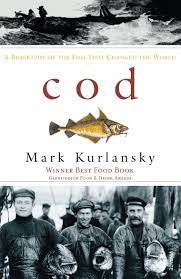
For the category Wild Animals of the 2022 NONFICTION READER CHALLENGE , I chose Cod, by Mark Kurlansky, 1999. The sub-heading of the book attracted me. I’ve read a number of non-fiction books about an item that ‘changed the world,’ such as coal, cotton and cement. I understand there is also a book about figs that claims the same thing. For some reason, I find such minute histories to be extremely interesting. Although I felt there was not enough support for how the codfish changed the world, I learned more information about the fish and the fishing industry than I ever thought I would know. This book was the winner of the Glenfiddich Food & Drink Awards as the Special Award Food Book 1999. I hadn’t known about that award, but it turns out that I had read one of the winning books ( Toast: The story of a boy’s hunger , by Nigel Slater). However, it was discontinued in 2008. I also like reading about the history of foods, for some reason. Even if they were not claimed to have ch...

The Big Necessity: Adventures in the World of Human Waste

Image
For the category Popular Science of the 2022 NONFICTION READER CHALLENGE , I chose The Big Necessity: Adventures in the World of Human Waste, by Rose George, 2008. The book focuses on practices of sanitation (i.e., toilets) in the world (or lack of them) and why this impacts everyone on the planet, as well as the planet itself. This seems like an unusual topic (one of the reasons it interested me), but also one that’s important yet rarely talked about. George refers to this many times throughout the book (“… we refuse to notice that we still don’t know how to properly deal with something that we all produce, up to several times a day, many million years after we first started producing it.”). However, some of the data she presents indicates why this should change. Lack of sanitation – or poor sanitation – affects almost everything about our lives, even if we live in a society that has effective sanitation. She starts with the statistic that 2.6 billion people don’t have sanitat...

Invisible Women: Exposing Data Bias in a World Designed for Men

Image
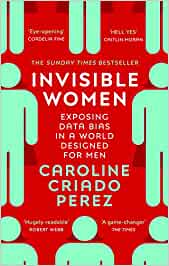
For the category Economics of the 2022 NONFICTION READER CHALLENGE , I chose Invisible Women: Exposing Data Bias in a World Designed for Men, by Caroline Criado Perez, 2019. Some things I already knew: women earn less than men for the same work; women do more unpaid work than men; women have fewer public toilet facilities, and medical studies generally use only men or more men than women, so are not necessarily relevant for women’s health (for example, heart attack symptoms). But there was so much more that I hadn’t realized – so much that the information became rather depressing. For example, I hadn’t realized to what extent the design of public spaces (streets, bus stops, public transportation routes, …) is based on data from and about men. As Criado Perez writes at the end of the section with chapters relating to different types of public spaces: “These are not niche concerns, and if public spaces are truly to be for everyone, we have to start accounting for the lives of ...

Kindred: Neanderthal Life, Love, Death and Art

Image
The book I chose for the 2022 NONFICTION READER CHALLENGE in the category Social History is Neanderthal Life, Love, Death and Art, by Rebecca Wragg Sykes, 2020. I checked the definition of ‘social history’ on Wikipedia to make sure I was on the right track: “a field of history that looks at the lived experience of the past.” This definition certainly suited this book, which I was planning to read anyway because I am very interested in archaeology and prehistory. As the title indicates, the book focuses on what is known about aspects of Neanderthal life – how and where they lived, what they ate, and what is now known about their culture. Almost everything most people think they know about Neanderthals is wrong. In the last two decades more has been discovered about their lives than in the previous century, and it is all fascinating. Instead of the unintelligent club-carrying thugs of the Stone Age, the Neanderthals were adaptable and extremely creative, being able to fashion delica...

Word By Word: The Secret Life of Dictionaries

Image
For the first book of the 2022 NONFICTION READER CHALLENGE , I read Word by Word: The Secret Life of Dictionaries , by Kory Stamper, 2017, in the category Language. Kory Stamper is a lexicographer for Merriam-Webster dictionary and writes about her experiences there by focusing on different words she has worked with and how they reveal peculiarities of the English language. In particular, it is quite a challenge to write a definition of a word, and she describes this in detail that is both fascinating and funny. She also reveals a lot of information about how a dictionary is created and updated, reflecting the changing nature of language. Each chapter focuses on one word (which is also the title of the chapter) to illustrate how it reveals some aspect of working with language. For example, the chapter “Irregardless” is subtitled “On Wrong Words” (and I was surprised to find out that she proves irregardless is not a wrong word!). The chapter “Bitch” is “On Bad Words;” “Nuclear” is ...